
Plato: Fun Multiplayer Games
Plato Team Inc.Casual
4.710.21K Reviews
- Version
- 7.3.1
- Installs
- 50.00M
- Age Rating
- Teen
Screenshots







Our Review of Plato: Fun Multiplayer Games
 Analysis by Appyee
I enjoy casual games most when they remove the awkward planning that usually comes before playing. Plato: Fun Multiplayer Games takes that approach by putting chatting and a broad selection of multiplayer games in one place. Instead of asking friends which separate app they already have installed, I can open one conversation and move into a quick game without changing platforms.
That sounds simple, but the real appeal is how well the app fits small gaps in the day. A short match can work while waiting for someone, and a longer session can turn into a relaxed group hangout. Plato Team Inc. has built this as a social casual game rather than a single deep competitive title, and that distinction matters. I would recommend it to people who value company and variety more than mastering one elaborate game.
The game is free to download, carries a Teen content rating, and works on Android devices running version 8.0 or later. It has reached over 50 million installs and holds a 4.7 average from around 834 thousand ratings, which gives a useful sense of its broad audience. Its current version is 7.3.1, and optional in-app purchases range from $0.99 to $199.99 per item, so I would still check spending controls before handing the phone to a younger player.
What playing Plato is really like
When I think about what playing Plato is really like, I focus less on any single match and more on how the group moves between conversation and play. A useful way to get started is to choose one familiar game before inviting everyone, so the first few minutes go toward playing rather than browsing. From there, the app’s visual and social cues shape the mood of each session.
A social hub rather than one main game
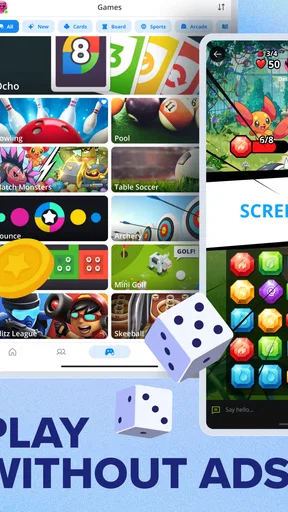
The first thing I noticed is that Plato is best understood as a shared social space with games attached. The store summary points to more than 50 games, including Poker, Pool and Carrom, but the important practical benefit is not simply the size of that menu. It is the ability to switch from one type of activity to another when a group loses interest.
That variety changes how I use it. If a conversation is lively, a simple game can sit in the background without demanding total concentration. If everyone wants something more focused, the group can choose a different option. This makes the app more flexible than installing an individual pool game, a separate card game and another board-game app just to cover the same social occasions.
There is a trade-off, though. A large collection can make the experience feel less focused than a dedicated game. Someone who wants carefully tuned competition, detailed progression or a serious ranking system may prefer an app built around one title. Plato is more useful when the people matter more than the particular game.
Where new users tend to get stuck
The most common friction is not necessarily the games themselves. It is understanding the app’s social flow. A new user may expect to choose a game immediately, while the experience makes more sense when approached as a conversation that can lead into play. I found it easier when I first decided who I wanted to play with, then treated the game selection as the next step rather than as the entire purpose of opening the app.
Another point of confusion is the difference between a game that looks familiar and the way it feels with real people. A pool or card game may be easy to recognize, but the quality of the session depends on whether the other players are available, responsive and interested in the same pace. A quiet group can make even a good game feel inactive, while a lively group can make a basic round surprisingly entertaining.
I also would not judge the whole app after trying only one title. The collection is the reason to stay, and different games suit different groups. For example, a quick round may work better with friends who have only a few minutes, while a more thoughtful board or card option may fit an evening conversation. The useful habit is to keep two or three reliable choices in mind instead of browsing endlessly whenever the group is ready to start.
Setup checks that prevent avoidable problems
Before inviting friends, I would make a few basic checks. First, I would confirm that the device uses Android 8.0 or later if I am installing it on an older phone or tablet. Compatibility problems can look like a game fault when the real issue is simply that the operating system is too old.
Next, I would make sure the app is updated to version 7.3.1 where that version is available for the device. Multiplayer sessions are particularly sensitive to mismatched or outdated software, even when the visible symptom is only a failed launch or an invitation that does not behave as expected. Updating before a planned group session is less frustrating than discovering the problem after everyone is waiting.
I would also test the basic social route before arranging a larger gathering. Open the app, locate the intended friend or conversation, start a small game and confirm that the other person can join. This quick rehearsal is more useful than assuming that a friend who can chat will automatically be ready for every game in the collection.
For younger players, I would review the device’s purchase protections as part of setup. The Teen rating gives a general age signal, but it does not replace a parent’s judgement about social play or spending. Since optional items can cost from $0.99 up to $199.99, a device-level purchase check is a sensible precaution even if nobody plans to buy anything.
Recovering a session when something goes wrong
When a multiplayer round stops behaving normally, I try to recover it in a clear order rather than repeatedly tapping the same button. I first check whether the problem affects only one person or everyone. If one player is stuck while the others can continue, that points toward a local device, connection or app-state issue. If the whole group is affected, waiting briefly and trying the session again is more sensible than blaming one handset.
Closing and reopening the app can clear a temporary state problem, especially after switching between conversations or games. I would then retry with a small, simple game before returning to the original activity. That test helps separate a general connection or session issue from a problem tied to one particular game flow.
If an invitation seems lost, I would avoid sending many duplicates. Repeated invites can make it harder to tell which one is current. Instead, I would return to the conversation, confirm that both players are looking at the same place and start again once. This is a small workflow change, but it prevents a casual game from turning into a confusing pile of stale attempts.
For a group session, one person should act as the organizer. I have found that it helps when one player chooses the game, confirms who is joining and communicates the next step in the conversation. Without that role, several people may open different games at once, assume someone else has started and conclude that the app is unresponsive.
When Plato is not the cause
Multiplayer problems are often blamed on the app even when the surrounding conditions are responsible. A weak or changing connection can interrupt a round, and switching between mobile data and Wi-Fi during play can make the session less stable. If the problem appears at the same time as other online services struggling on the device, I would test the connection before reinstalling anything.
Device resources can matter as well. An older phone with very little free storage, many background apps or an overdue system update may handle a social game less smoothly than expected. Restarting the device, closing unused apps and checking available space are ordinary steps, but they are worthwhile because they address the environment around the game rather than destroying the current setup.
It is also important to separate a design preference from a technical failure. If a game feels too slow, too casual or less detailed than a dedicated alternative, that does not mean it is malfunctioning. Plato is intentionally broad and social. Someone looking for the strongest physics, the deepest strategy or a highly specialized competitive scene may simply be using the wrong kind of app for that goal.
Small habits that make the collection more enjoyable
My most useful habit is to match the game to the group’s attention level. When people are chatting about unrelated things, I choose something that can be played in short turns. When everyone is actively watching the screen, I choose a title that rewards more concentration. This prevents the common mistake of selecting a game that demands more focus than the social situation can provide.
I also use the variety as a way to keep a group together when tastes differ. One friend may prefer cards, another may enjoy pool and someone else may want a board-style game. Rather than arguing over one permanent favorite, rotating between different choices gives each person a reason to join. That is a stronger use of the collection than treating every game as something I must learn equally well.
A further tip is to introduce the app with one familiar activity and only then explore. Starting with a recognizable game lowers the learning barrier, while moving through the wider collection later keeps the session fresh. If I begin by opening every available option, the menu itself can become the activity and the group may lose momentum before playing.
I would also keep expectations realistic about free access and optional purchases. The free entry point makes it easy to try with friends, but the presence of purchasable items means I would not assume that every part of the experience is entirely outside a spending system. I prefer to decide in advance whether purchases are welcome, restricted or ignored, especially during an informal group session where someone may tap quickly without thinking.
How it compares with separate game apps
Compared with a dedicated pool, poker or board-game app, Plato’s advantage is convenience. A single social destination is easier when the group wants to change activities, and it reduces the need to persuade everyone to install several different apps. It is also better suited to friends who care about chatting while playing rather than entering a specialized competitive environment.
The compromise is depth. A specialist app may offer a more concentrated interface, more detailed practice tools or a stronger sense of identity around one game. If I wanted to spend weeks improving at one particular title, I would look at that kind of alternative first. Plato makes more sense for variety, quick access and mixed groups.
It also differs from ordinary messaging apps that happen to support games. Here, the games are central enough to shape the conversation, rather than being an occasional extra attached to a communication tool. That makes the experience more playful, but it can also feel like too much if I only want straightforward messaging without game invitations or a broad activity menu.
Who should try it, and who should skip it
I think Plato is a strong fit for friends who already enjoy casual competition, remote groups looking for a shared activity and families or social circles with different game preferences. It is especially useful when nobody wants to organize a complicated event. A person can suggest a quick round, see who is interested and move on to another option if the first choice does not work.
I would be more cautious about recommending it to someone who plays alone most of the time. The app’s value rises sharply when other people are available, so it is not the best choice if the main goal is a rich solo campaign or a carefully structured single-player experience. I would also point serious competitive players toward a dedicated title if they want one game with maximum depth and a highly specialized community.
People who dislike switching between activities may find the broad collection distracting rather than helpful. The same flexibility that keeps a group entertained can make the app feel unfocused to a player who wants one clear objective. In that case, a single-purpose game will probably feel cleaner.
A realistic everyday session
Imagine a group of friends waiting for dinner while one person is late. Instead of starting a long game that nobody can finish, I would open Plato, invite the people already available and pick a short, familiar option. The group can chat while playing, stop when the late friend arrives and then switch to another activity if everyone wants to continue.
The important part is not winning that first round. It is that the app turns an unplanned wait into a shared moment without requiring everyone to install a different game. If the session fails to start, the organizer can check the conversation, retry once and test another game. If the connection is poor, the group can stop treating the delay as a game problem and simply return to chatting.
That scenario also shows the app’s limits. It will not create closeness between people who do not want to interact, and it cannot compensate for an unreliable connection or an incompatible device. Its job is to make a willing group’s casual time easier to fill.
My practical verdict
After using Plato as a social game collection, I see its main strength clearly: it makes variety feel convenient. The free entry, familiar game types and chat-centered approach make it easy to suggest to friends without turning the invitation into a technical project. The broad selection is more valuable in real life than a long feature list because it gives a group somewhere to go when the first game is not a good fit.
My reservations are equally practical. New users may need a moment to understand the social workflow, multiplayer sessions can be affected by ordinary device or connection problems and the collection will not satisfy players seeking the depth of a dedicated specialist game. Optional purchases also deserve sensible controls, particularly on shared devices or with younger users.
For me, the deciding question is simple: do you want to play with people, or do you want to master one game? If the answer is the first, Plato Team Inc.’s casual multiplayer approach is easy to recommend. If the answer is the second, a focused alternative may serve you better. I would install it for a friend group that enjoys changing games, chatting between turns and making use of short pockets of free time.
Overall, this is a practical social game for people who value low-pressure multiplayer sessions. I would begin with a small test group, check the device and update requirements, agree on purchase boundaries and keep one backup game ready. With those simple habits, the app’s flexibility becomes its best feature rather than a source of confusion.
Verdict
Strengths of Plato: Fun Multiplayer Games
- Quick matchmaking makes it easy to find players at any time.
- Includes several casual games in one app.
- Private rooms are useful for playing with friends.
- Simple controls make most games easy to learn.
- In-game voice chat helps groups communicate while playing.
Limitations of Plato: Fun Multiplayer Games
- Some games may feel repetitive after extended play sessions.
- A stable internet connection is required for multiplayer matches.
- Voice chat can be distracting or uncomfortable for some users.
- Certain features or content may depend on in-app purchases.
- Match quality can vary depending on the other players’ connection.
Similar Picks in This Category
View All
My Talking Angela
Outfit7 Limited4.2

My Talking Tom
Outfit7 Limited4.3

Pou
Zakeh4.2

My Talking Tom 2: Pet Game
Outfit7 Limited4.3

Candy Crush Saga
King4.6

Bridge Race
Supersonic Studios LTD4.1
Frequently Asked Questions
What is Plato: Fun Multiplayer Games?
Plato is a social gaming app that combines online multiplayer games with chat and community features. It offers a collection of casual games, such as pool, chess, card games, mini golf, and other quick-play titles, allowing you to challenge friends or meet other players. The app is designed for short matches, group conversations, and ongoing social interaction rather than a single traditional campaign.
Is Plato: Fun Multiplayer Games free to download and play?
Plato can generally be downloaded and used for free on supported Android and iOS devices. Many of its games and social features are available without an upfront purchase, although the app may include optional in-app purchases, premium items, or other paid content. Availability of specific features can change, so it is recommended to check the current store listing and review purchase settings before downloading.
Do I need an internet connection to use Plato?
Yes, Plato is primarily an online multiplayer and social app, so an active internet connection is normally required to play matches, join rooms, send messages, and communicate with other users. Some menus or previously loaded content may open briefly without a connection, but the core experience depends on online services. A stable Wi-Fi or mobile-data connection can help prevent disconnections during games.
Can I play Plato with friends, or am I matched with strangers?
Plato supports both options. You can invite friends, create or join game rooms, and use its chat features to play together, while matchmaking and public rooms can connect you with other users when your friends are unavailable. The social nature of the app means that interaction with strangers is possible, so users should review privacy settings, avoid sharing personal information, and use blocking or reporting tools when necessary.
Is Plato suitable for children and teenagers?
Plato may appeal to younger players because its games are simple and casual, but it also includes real-time communication and interaction with other users. Age suitability therefore depends on the child, the local age rating, and how parental controls are configured. Parents should review the app’s current rating, chat and privacy options, possible in-app purchases, and the app’s community guidelines before allowing unsupervised use.
Play our best games!


